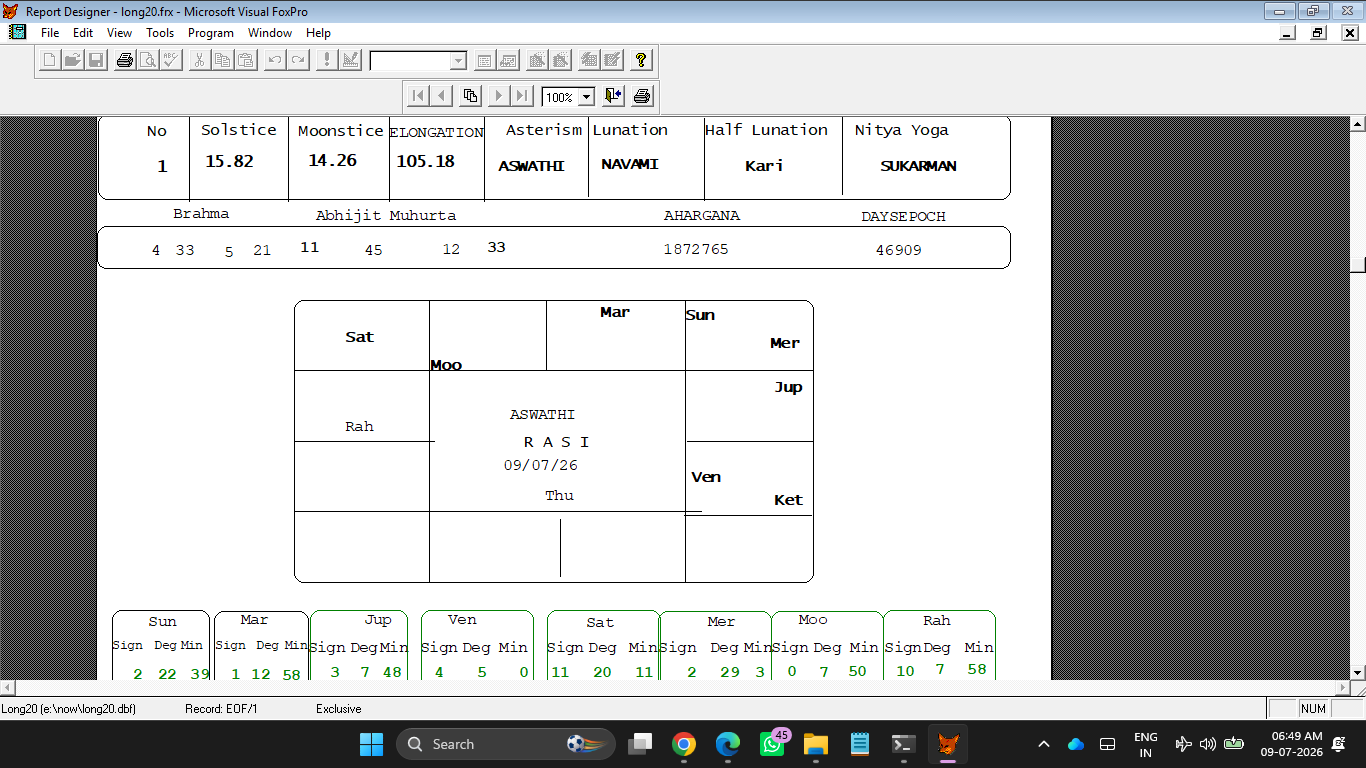
It need not be added that a lunation or synodic month means the interval between two consecutive full moons or new moons. Conjunction ( New Moon ) is 0 degrees and Opposition ( Full Moon ) is 180 degrees
Hence a solar year does not have a whole number of lunar months ( about 12.37 lunations ) So a thirteenth embolismic or intercalary month is inserted.
It was observed that 19 solar years or 19*12 = 228 solar months = 235 lunations and hence 7 Adhi Masas were found in every 19 years. An intercalary or 13th month had to be inserted in a 19 year cycle and 19/7 was the ratio. .
They are called Adhi Masas in Indian Astronomy and they were computed using the Theory of continued fractions. The Theory of contiued Fractions is attributed to Euler. This 19 year old cycle is called the Metonic Cycle, named after the Greek astronomer, Meton.
But then the Indian mathematicians correctly computed the Adhi Masas, centuries before Meton or Euler ! The Indian National Calender is lunisolar, whose dates both indicate the solar year and the moon phases and the next date when the New Moon or Full Moon will occur. The length of the synodic month is given as 29.5305879 days in the Surya Siddhanta, which is correct to six decimals. Surya Siddhanta stated that there are 15933396 Adhi Masas in 51840000 solar months !
It need not be added that a lunation or synodic month means the interval between two consecutive full moons or new moons. Conjunction ( New Moon ) is 0 degrees and Opposition ( Full Moon ) is 180 degrees
Hence a solar year does not have a whole number of lunar months ( about 12.37 lunations ) So a thirteenth embolismic or intercalary month is inserted.
It was observed that 19 solar years or 19*12 = 228 solar months = 235 lunations and hence 7 Adhi Masas were found in every 19 years. An intercalary or 13th month had to be inserted in a 19 year cycle and 19/7 was the ratio. .
They are called Adhi Masas in Indian Astronomy and they were computed using the Theory of continued fractions. The Theory of contiued Fractions is attributed to Euler. This 19 year old cycle is called the Metonic Cycle, named after the Greek astronomer, Meton.
But then the Indian mathematicians correctly computed the Adhi Masas, centuries before Meton or Euler ! The Indian National Calender is lunisolar, whose dates both indicate the solar year and the moon phases and the next date when the New Moon or Full Moon will occur. The length of the synodic month is given as 29.5305879 days in the Surya Siddhanta, which is correct to six decimals. Surya Siddhanta stated that there are 15933396 Adhi Masas in 51840000 solar months !
Consisting of 16 basic aphorisms or Sutras, Vedic Mathematics is a system of Maths which prevailed in ancient India. Composed by Bharati Krishna Thirtha, these 16 sutras help one to do faster maths.
The first aphorism is this
“Whatever the extent of its deficiency, lessen it still further to that very extent; and also set up the square (of that deficiency)”
When computing the square of 9, as the nearest power of 10 is 9, let us take 10 as our base. As 9 is 1 less than 10, we can decrease it by the deficiency = 9-1 =8. This is the leftmost digit
On the right hand put deficiency^2, which is 1^2.
Hence the square of nine is 81.
For numbers above 10, instead of looking at the deficit we look at the surplus.
Consisting of 16 basic aphorisms or Sutras, Vedic Mathematics is a system of Maths which prevailed in ancient India. Composed by Bharati Krishna Thirtha, these 16 sutras help one to do faster maths.
The first aphorism is this
“Whatever the extent of its deficiency, lessen it still further to that very extent; and also set up the square (of that deficiency)”
When computing the square of 9, as the nearest power of 10 is 9, let us take 10 as our base. As 9 is 1 less than 10, we can decrease it by the deficiency = 9-1 =8. This is the leftmost digit
On the right hand put deficiency^2, which is 1^2.
Hence the square of nine is 81.
For numbers above 10, instead of looking at the deficit we look at the surplus.
Consisting of 16 basic aphorisms or Sutras, Vedic Mathematics is a system of Maths which prevailed in ancient India. Composed by Bharati Krishna Thirtha, these 16 sutras help one to do faster maths.
The first aphorism is this
“Whatever the extent of its deficiency, lessen it still further to that very extent; and also set up the square (of that deficiency)”
When computing the square of 9, as the nearest power of 10 is 9, let us take 10 as our base. As 9 is 1 less than 10, we can decrease it by the deficiency = 9-1 =8. This is the leftmost digit
On the right hand put deficiency^2, which is 1^2.
Hence the square of nine is 81.
For numbers above 10, instead of looking at the deficit we look at the surplus.
By means of the same argument, the circumference can be computed in another way too. That is as (follows): The first result should by the square root of the square of the diameter multiplied by twelve. From then on, the result should be divided by three (in) each successive (case). When these are divided in order by the odd numbers, beginning with 1, and when one has subtracted the (even) results from the sum of the odd, (that) should be the circumference. ( Yukti deepika commentary )
This quoted text specifies another formula for the computation of the circumference c of a circle having diameter d. This is as follows.
By means of the same argument, the circumference can be computed in another way too. That is as (follows): The first result should by the square root of the square of the diameter multiplied by twelve. From then on, the result should be divided by three (in) each successive (case). When these are divided in order by the odd numbers, beginning with 1, and when one has subtracted the (even) results from the sum of the odd, (that) should be the circumference. ( Yukti deepika commentary )
This quoted text specifies another formula for the computation of the circumference c of a circle having diameter d. This is as follows.