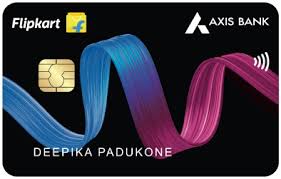
C R E D I T C A R D B O O M -
CAPITALISE zodiacastro1@gmail.comPh
93885 56053 7C Shaktan Manor Apts S T Nagar Trichur 680001, We
recommend some useful Credit Cards which can give good benefits.The
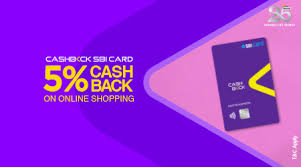
Numero Uno is the Cashback SBI Card, with 5% Cashback on Online Spend and 1% on
offline Spend. See, 6% of your Total Spend is credited to your Ac as Cashback.
Hindu Astrology
Consultancy & Software
Article Title: Getting Contact And Order Information From
Interested Web Site Visitors.
Author: Fred Black
Word Count: 444
Article URL: http://www.isnare.com/?aid=99794&ca=Internet
Format: 64cpl
Author's Email Address: fred[at]websitetrainingonline.com
(replace [at] with @)
How do I create a web page that allows visitors to my web site
to submit their contact information to me?
Let's pretend that you are a very serious amateur photographer
and you have a web site where you show off some of your
photographs. Also suppose that you'd like to offer prints of
your photographs for sale on your web site. We're not talking
about drugstore prints; we're talking about framed,
professional quality prints that hang in your home or office.
It seems like a huge task to create an online order system as
you offer various sizes of prints with various frames and
different mattes. The simplest option is to create a web page
with a form to collect contact and other information from a
prospective customer. This information is emailed to you when
they submit the form. You can then follow up with the
prospective customer, finding out their needs and quoting a
price.
This scenario works well in environments where order volume is
low enough that an automated order processing system is not
required. The example of higher-end customized photography fits
this perfectly. It also has the added benefit of creating a
personalized order process where your customer gets to know
you. If handled correctly, this personal contact can really
enhance repeat sales.
Is this hard to do? Just how do you make a web page to get
contact information sent to you by email? The answer is you use
a form. What's a form you ask? A form is a place on a web page
containing fields where you enter text and select choices like
red, blue, green, or small, medium, large. HTML Form tags are
used to create a form. Inside the HTML Form tags, you use
different types of HTML Form Field Tags. Like the Input Tag for
getting text such as a name, email, or street address, radio
button or checkbox tags for selecting among choices, the select
tag for creating drop-down selectors, etc. Also, the button type
for creating a button such as the submit button.
After creating the form and making your page look like you want
it to, you'll need to create the scripting or code that runs on
the server to receive the data from the form and email t to
you. This is easy on most servers and can be part of the same
page that contains the form.
This is a low maintenance and fairly easy way to accept orders
or other types of requests from your web site visitors. Its
advantages are that it requires little maintenance and upkeep.
About The Author: Fred Black is the founder of http://www.WebScriptingOnline.com,
A web site where you can
Learn How To Make Web Page Scripts and Create Interactive Web
Pages.
Fullscreen VideosearchCopy linkFind any serviceVideo Header ExampleVideo Header Example
Hindu
Astrology Consultancy & Software zodiacastro1@gmail.comPh
93885 56053 7C Shaktan Manor Apts S T Nagar Trichur 680001
C
R E D I T C A R D B O O M - CAPITALISE
We
recommend some useful Credit Cards which can give good benefits. The Numero Uno
is the Cashback SBI Card, with 5% Cashback on Online Spend and 1% on offline
Spend. See, 6% of your Total Spend is credited to your Ac as Cashback.
In
India, there are 114 million Credit Cards. Just 8% of population. Anybody can
guess the potential in a digitalising economy. Digital India !
Welcome to eAstroVedica
The
Celestial Site highlighting Sciences of the Absolute and Time, amongst 18
Sciences, under Guidance Divine, a recommender of top qualities in the
terrestrial
 zodiacastro1@gmail.com Ph
93885 56053 7C Shaktan Manor Apts S T Nagar Trichur 680001, We
recommend some useful Credit Cards which can give good benefits. The
Numero Uno is the Cashback SBI Card, with 5% Cashback on Online Spend and 1% on
offline Spend. See, 6% of your Total Spend is credited to your Ac as Cashback.
zodiacastro1@gmail.com Ph
93885 56053 7C Shaktan Manor Apts S T Nagar Trichur 680001, We
recommend some useful Credit Cards which can give good benefits. The
Numero Uno is the Cashback SBI Card, with 5% Cashback on Online Spend and 1% on
offline Spend. See, 6% of your Total Spend is credited to your Ac as Cashback.