How Search Engines Connect
Sellers and Buyers
By David Leonhardt
Maggie knows how to find what she wants. She lets her fingers do the
walking – not in the Yellow Pages, but at Google.com. She wants to learn
about bread baking, and you have just written Bread Baking Made Simple,
and you sell some great baking tools. The good news is the Google and other
search engines exist for one simple reason: to help Maggie find your website.
Google will show Maggie 534,000 resources on "bread baking".
Unless she fails to find what she wants on the first page, or top 10 results,
she will never find your website listed 124th in the results. (Actually, if
she does not find what she wants in the top twenty or thirty results, she is
likely to refine her search to "easy bread baking" or "home
bread baking").
How do you get into the top 10 results so Maggie can find your website? You
might have heard a lot about "search engine optimization" and
"ranking analysis" and "algorithms". It all sounds very
complex, but it really works on a simple 1 – 2 – 3 principle.
- A search engine will show Maggie only resources (websites) it has on
record. So make sure to submit your site to the key search engines and
directories. You do not need to hire somebody who will charge you big
dollars to do this. Nor should you fall for any of the auto-submit
software or services. This should be done by hand, and anybody can do it.
You can do it yourself.
- The search engine will rank highest those websites it feels are most
"important". This means you have to show that your website is
most important. There are a few simple things you can do. First, make sure
you have content. Text content equals importance on the Internet. Links,
both coming in and going out, are key. Connectivity equals importance on
the Internet. Get listed in the major directories (DMOZ.com, Yahoo.com,
Zeal.com, JoeAnt.com, etc.), as this also is a measure of importance.


- The search engine will show Maggie the most "relevant"
high-ranking resources. Google might rank http://TheHappyGuy.com
relatively very high, but it is totally irrelevant to a search for bread
baking. How does a search engine know which websites are most relevant for
Maggie's search? By the number of times "bread baking" shows up
in text on your web page. By the variety of ways it shows up on your page.
By number web pages you link to and that link to you with the words
"bread baking" included.
Are you ready to roll? Possibly. Some of this you can easily do yourself. But
there are three places that are worth spending money to help all the Maggies
out there find your website and your book.
The first is choosing the right keywords. It might look simple, but
"bread baking" might not even be the best keyword phrase to focus
on. It might be "easy bread baking" or "home bread
baking". The most searched terms might not be the best, nor the term with
the least competition.
The second is to prepare a link strategy. The "link exchange"
pages that are getting more popular each day are also becoming less effective
each day. Here are just a few of the linking factors that will affect whether
Maggie discovers your book:
- The total number of incoming and outgoing links
- The importance of the sites you link to and from
- The relevancy of the sites you link to and from
- Which pages on their sites and on yours are being linked
- What you include in the incoming and outgoing links
- Where on the page the links are placed
- How many links are on those pages
- How many pages are linked to or have outgoing links
- The ratio of links to content on the pages involved
You can implement the strategy yourself, but it is worth hiring somebody to
put it together for you. Ask the person what factors she would consider when
building a strategy for you. If she does not mention several of the above,
your money is better spent elsewhere.
The third place to invest is to have somebody knowledgeable review your
html code. Chances are that you have missed numerous opportunities to let the
search engines know your website is relevant, and possibly some opportunities
to show it is important.
 zodiacastro1@gmail.com Ph
93885 56053 7C Shaktan Manor Apts S T Nagar Trichur 680001, We
recommend some useful Credit Cards which can give good benefits. The
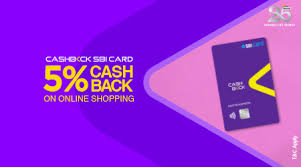
Numero Uno is the Cashback SBI Card, with 5% Cashback on Online Spend and 1% on
offline Spend. See, 6% of your Total Spend is credited to your Ac as Cashback.
zodiacastro1@gmail.com Ph
93885 56053 7C Shaktan Manor Apts S T Nagar Trichur 680001, We
recommend some useful Credit Cards which can give good benefits. The
Numero Uno is the Cashback SBI Card, with 5% Cashback on Online Spend and 1% on
offline Spend. See, 6% of your Total Spend is credited to your Ac as Cashback.