| 1 |
This number represents unity. Since it is part of all numbers it
represents the ideal symbol of deity. It is the origin, the
elementary. |
| 2 |
Polarity and rupture. It is the coming apart of unity--yin yang,
good and evil, man and woman, the realm of opposites. |
| 3 |
The holiest of all numbers, it is still a part of our unconscious
thinking. The triangle, the habitual use of threes in listing things,
even the classic comic technique of repeating something 3 times, with
the 3rd repetition altered slightly to make the punch line. In
religion, the highest deities are in threes: Babylon had Anu, Bel and
Ena;; India had Brahma, Vishnu and Shiva; Greco-Roman Jupiter, Juno
and Minerva, and the Christian Holy Trinity, Father, Son and Holy
Spirit. |
| 4 |
The number four was associated with basic divisions of matter and
space:; the four cardinal points, the four humors of the body, the
four horsemen of the Apocalypse, the four rivers of paradise, the four
cardinal virtues, the four winds, the four seasons, the four main
prophets and the four evangelists. |
|
| 5 |
The number five consists of two unequal parts, 2 and 3. The
diversity brings evil and misfortune. The five symbolizes the
individual (one who defies the natural order and is punished), the
five fingers on the hand, the pentagram. |
| 6 |
God created the world in six days. Six is the sum of 3+3 or 1+2+3.
Therefore it is perfect. Christ was crucified on the sixth day of the
week, and he died in the sixth hour of the day. |
| 7 |
From earliest times this number was associated with celestial beings
and spiritual forces; seven days in a week, the seven known planets
(including the sun and the moon); the 7 evil spirits, the seven levels
of a ziggurat (astral tower built by the Babylonians--the most famous
being the Tower of Babel); according to St. Augustine, seven
symbolized the perfection of God--he created the world and rested on
the seventh day; Christian life is ordered by seven: seven capital
sins, seven virtues, seven sacraments. |
| 8 |
The first number after seven, the symbol of life, the new life after
baptism (both in pagan and Christian times). In Christian belief, the
resurrection of Christ happens on the eighth day. The octagon is the
favoured form for the baptismal font. |
| 9 |
The result of 3x3, nine represents an even greater holiness found in
three. |
| 10 |
According to St. Augustine, this number signifies perfection,
because it is the sum of 3+7. It is found in the ten commandments,
consisting of 3 laws pertaining to the love of God, and seven to the
love of one's neighbour. In Hebraic liturgy it can be found in the ten
shores of Egypt, the ten ropes of the tent of the tabernacle, the
height of the cherubs in the temple and the ten horns of the
apocalyptic beast. Ten is the round and perfect number that forms the
basis of the decimal system and is the universal number for the
Pythagoreans. |
| 12 |
This number formed the basis of the Sumerian and Babylonian
numerical system. It holds the twelve signs of the zodiac, the twelve
months of the year, the twelve hours of the day. It was significant in
Jewish religion:; the twelve gates of paradise, the twelve tribes of
Israel, the twelve bronze calves. In Christianity:; the twelve
apostles, the twelve stars around the head the apocalyptic woman, etc. |
 zodiacastro1@gmail.com Ph
93885 56053 7C Shaktan Manor Apts S T Nagar Trichur 680001, We
recommend some useful Credit Cards which can give good benefits. The
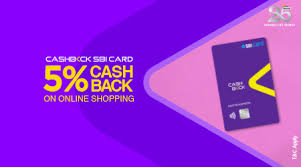
Numero Uno is the Cashback SBI Card, with 5% Cashback on Online Spend and 1% on
offline Spend. See, 6% of your Total Spend is credited to your Ac as Cashback.
zodiacastro1@gmail.com Ph
93885 56053 7C Shaktan Manor Apts S T Nagar Trichur 680001, We
recommend some useful Credit Cards which can give good benefits. The
Numero Uno is the Cashback SBI Card, with 5% Cashback on Online Spend and 1% on
offline Spend. See, 6% of your Total Spend is credited to your Ac as Cashback.