The Pagan Origins of Easter
|
|
 zodiacastro1@gmail.com Ph
93885 56053 7C Shaktan Manor Apts S T Nagar Trichur 680001, We
recommend some useful Credit Cards which can give good benefits. The
Numero Uno is the Cashback SBI Card, with 5% Cashback on Online Spend and 1% on
offline Spend. See, 6% of your Total Spend is credited to your Ac as Cashback.
zodiacastro1@gmail.com Ph
93885 56053 7C Shaktan Manor Apts S T Nagar Trichur 680001, We
recommend some useful Credit Cards which can give good benefits. The
Numero Uno is the Cashback SBI Card, with 5% Cashback on Online Spend and 1% on
offline Spend. See, 6% of your Total Spend is credited to your Ac as Cashback.
Hindu Astrology Consultancy & Software






|
|
The Pagan Origins of Easter
| ||
|
|
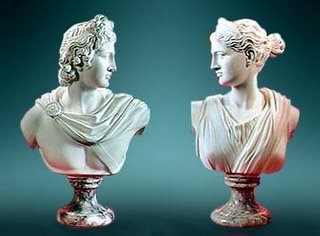
In the Mediterranean region, there was a pre-Christian spring
celebration centered around the vernal equinox (March 20 or 21)
that honored Cybele, the Phrygian goddess of fertility. Cybele’s
consort, Attis, was considered born of a virgin and was believed
to have died and been resurrected three days later. Attis derived
his mythology from even earlier gods, Osiris, Dionysus, and
Orpheus, who also were supposed to have been born of a virgin and
suffered death and resurrection as long as 500 years before Christ
was born. The death of Attis was commemorated on a Friday and the
resurrection was celebrated three days later on Sunday. There are other Easter traditions that are pagan in origin. The
Easter sunrise service is derived from the ancient pagan practice
of welcoming the sun on the morning of the spring equinox, marking
the beginning of spring. What we now call Easter lilies were
revered by the ancients as symbols of fertility and representative
of the male genitalia. The ancient Babylonian religions had
rituals involving dyed eggs as did the ancient Egyptians. The Christian version of Easter is celebrated after the first
full moon after the vernal equinox. Modern day neo-pagans usually
have their spring celebrations on the day of the equinox. Either
way, these celebrations have gone on every year continuously for
over 2500 years. So, next Sunday, if you go to an Easter sunrise
service, hunt for colored eggs or eat marshmallow bunnies,
remember you are indulging in pagan rituals that celebrate
fertility and the advent of springtime! Read about The
Pagan Origins of Christmas
 Easter
celebrations were held hundreds of years before Christ was born as
festivals of spring honoring Eostre, the great mother goddess of
the Saxons. This name was fashioned after the ancient word for
spring, Eastre. The goddess Ostara was the Norse equivalent whose
symbols were the hare and the egg. From this comes our modern
tradition of celebrating Easter with eggs and bunnies.
Easter
celebrations were held hundreds of years before Christ was born as
festivals of spring honoring Eostre, the great mother goddess of
the Saxons. This name was fashioned after the ancient word for
spring, Eastre. The goddess Ostara was the Norse equivalent whose
symbols were the hare and the egg. From this comes our modern
tradition of celebrating Easter with eggs and bunnies.



Hindu Astrology Consultancy & Software zodiacastro1@gmail.com Ph 93885 56053 7C Shaktan Manor Apts S T Nagar Trichur 680001
C R E D I T C A R D B O O M - CAPITALISE
We recommend some useful Credit Cards which can give good benefits. The Numero Uno is the Cashback SBI Card, with 5% Cashback on Online Spend and 1% on offline Spend. See, 6% of your Total Spend is credited to your Ac as Cashback.In India, there are 114 million Credit Cards. Just 8% of population. Anybody can guess the potential in a digitalising economy. Digital India !
The Celestial Site highlighting Sciences of the Absolute and Time, amongst 18 Sciences, under Guidance Divine, a recommender of top qualities in the terrestrial
or celestial planes with ARTICLES - TERRESTRIAL & TRANSCENDENTAL - Site - https://www.eastrovedica.com