What is CRM?
by Bob Thompson, CRMGuru.com
The
concepts of customer relationship management have been in the air ever since one
caveman had a choice of buying an arrowhead from either Og or Thag, but CRM as a
term gained currency in the mid-1990s. Market analysts squabble over the exact
figure, but all agree that in the next few years companies will pour billions of
dollars into CRM solutions—software and services designed to help businesses
more effectively manage customer relationships through any direct or indirect
channel a customer opts to use.
So why, with the market for CRM technology exploding, is the most common
question asked at CRMGuru.com "What is CRM?" Probably because if you
ask three CRM experts, you'll get five different answers.
We put the question to a panel of CRM experts—the "gurus" working
with CRMGuru.com—to weed out idiosyncratic spin and whittle CRM down to its
essence:
| Customer relationship
management (CRM) is a business strategy to acquire and manage the
most valuable customer relationships. CRM requires a customer-centric
business philosophy and culture to support effective marketing, sales
and service processes. CRM applications can enable effective customer
relationship management, provided that an enterprise has the right
leadership, strategy and culture. |
There you go. Simple question, simple answer, right? Ah, what is simple is
not always easy. As many business executives and CRM project managers can
attest, effective CRM is about as simple as the answer to how to lose
weight—eat less and exercise more—and just as easy to do.
Customer-Centric: The Starting Point
Let's spread that definition of CRM out on the table here. How exactly does a
company create a "customer-centric business philosophy and culture?"
Hint: not with a software package.
CRM—at least the successful, useful and profitable kind—always starts
with a business strategy, which then drives changes in the organization and work
processes, which are in turn enabled by information technology. The reverse
never works. Never. We'll send you a case of champagne for every company you can
find that automated their way to a new business strategy.
Projects that focus first on technology, rather than business objectives, are
destined for failure, according to both extensive best practices research and
the sob stories at O'Malley's Happy Hour. A customer-centric business, however,
is perfectly poised to reap significant benefits using CRM technology.
Now, the strategy part of CRM isn't new. Savvy business executives have
always understood the importance of focusing on customers with the best
potential for sales and profits and providing good service so they'll come back
again and again. Notice that you need techno-toys for none of this. Consider a
successful small business: The business owner and the staff work hard to provide
personal, high-quality service, building a loyal customer base over time.
Computers optional.
So why has CRM bulled its way to a billion-dollar industry? Bottom line:
Power has shifted to customers, who stand astride three powerful currents:
- The failure of enterprise resource (ERP) planning systems to bestow a
lasting competitive advantage for companies. Your back office is fully
automated? Nice. So?
- The cycle of innovation-to-production-to-obsolescence has accelerated,
leading to an abundance of options for customers and a shrinking market
window for vendors.
- Internet-surfing customers have a far easier time collecting information
about competing suppliers and can switch to another vendor at the click of a
mouse.
With product advantages reduced or neutralized in many industries because of
increased "commoditization," the customer relationship, itself, is the
focus of competitive advantage. For larger businesses, the neighborhood boutique
approach is impractical. CRM technology enables a systematic way of managing
customer relationships on a larger scale.
The Customer Relationship Lifecycle
Traditionally—defined as "before you realized what the Internet was
all about"—enterprise employees were the primary users of applications
designated "CRM." Then e-business or—a buzzword flavor of the
month—"eCRM" applications were introduced to allow enterprises to
interact directly with customers via corporate web sites, e-commerce storefronts
and self-service applications. Starting in 1999, partner relationship management
applications hit the market, designed to support channel partners and other
intermediaries between an enterprise and its end customers.
These applications support the following business processes involved in the
customer relationship lifecycle:
- Marketing. Targeting prospects and acquiring new customers
through data mining, campaign management and lead distribution. Remember,
the emphasis here is on long-term relationship value, not quick hit.
- Sales. Closing business with effective selling processes
using proposal generators, configurators, knowledge management tools,
contact managers and forecasting aids—all without uttering The Eight Words
That Kill A Sale: "Let me get back to you on that."
- E-commerce. In the Internet Age—welcome to it—selling
processes should transfer seamlessly into purchasing transactions and be
done quickly, conveniently and at the lowest cost. All customers should have
one face with your company, no matter which touch-point they choose to use.
- Service. Handling post-sales service and support issues with
call center applications or web-based customer self-service options. We said
"handling," not "sloughing off to an inadequate FAQ
page."
CRM is a business strategy to create and sustain long-term, profitable
customer relationships. Successful CRM initiatives start with a business
philosophy that aligns company activities around customer needs. Only then can
CRM technology be used as it should be used—as a critical enabling tool of the
processes required to turn strategy into business results. •
Bob Thompson is CEO of CustomerThink Corporation, an independent Customer
Management research and publishing firm. He is also founder of CRMGuru.com, the
world's largest industry portal dedicated to helping business leaders improve
customer management success. Since 1998, Mr. Thompson has researched the leading
industry trends, including partner relationship management, customer value
networks and customer experience management. In January 2000, he launched
CRMGuru.com, which now serves 300,000 business leaders monthly through its web
site and email newsletters. Mr. Thompson is a popular keynote speaker at
conferences worldwide, and has written numerous articles and papers including
his most recent report, Customer
Experience Management: A Winning Business Strategy for a Flat World. Before
starting CustomerThink, he had 15 years of experience in the IT industry,
including positions as business unit executive and IT strategy consultant at
IBM. You can contact Thompson at bob@crmguru.com.
|
 zodiacastro1@gmail.com Ph
93885 56053 7C Shaktan Manor Apts S T Nagar Trichur 680001, We
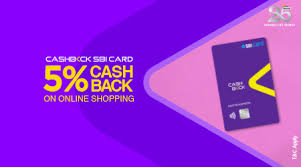
recommend some useful Credit Cards which can give good benefits. The
Numero Uno is the Cashback SBI Card, with 5% Cashback on Online Spend and 1% on
offline Spend. See, 6% of your Total Spend is credited to your Ac as Cashback.
zodiacastro1@gmail.com Ph
93885 56053 7C Shaktan Manor Apts S T Nagar Trichur 680001, We
recommend some useful Credit Cards which can give good benefits. The
Numero Uno is the Cashback SBI Card, with 5% Cashback on Online Spend and 1% on
offline Spend. See, 6% of your Total Spend is credited to your Ac as Cashback.